Case study · Live · 2026
Life-OS
A centralized personal operating system with gamification. Tracks tasks, fitness, habits, and ideas with XP progression, streak mechanics, and energy-level tracking — all in one dashboard.
8
Modules
XP · badges · streaks
Gamification
Supabase realtime
Sync
Web + Telegram
Interfaces
01
Why build this?
Existing productivity tools are fragmented — tasks in Todoist, fitness in Strong, habits in Streaks, notes in Notion. Life-OS unifies everything into a single dashboard with a gamification layer that makes daily consistency feel rewarding. As a student balancing academics, side projects, and fitness, having one source of truth for everything saves context-switching overhead.
02
Command center
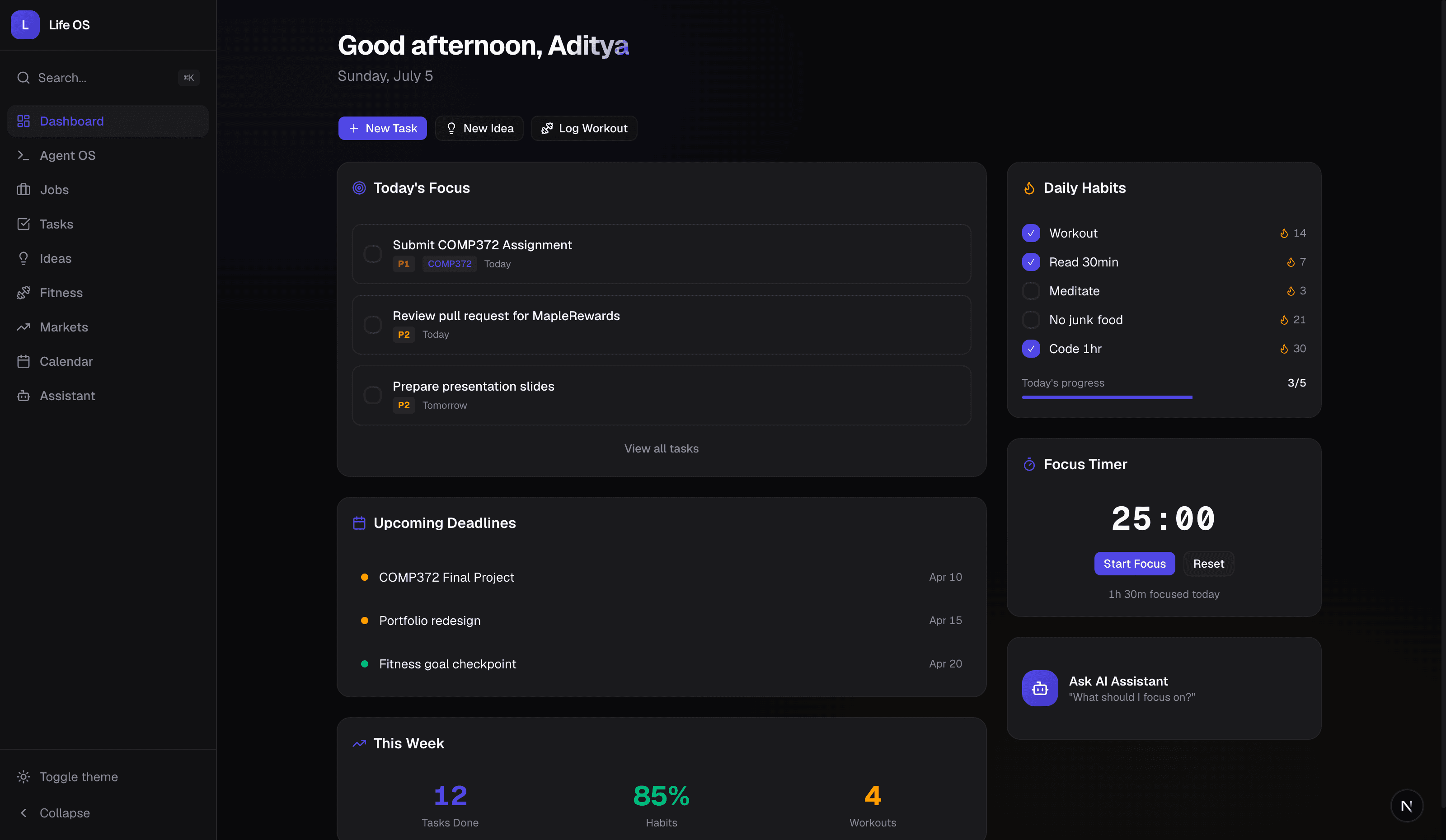
The home dashboard shows everything at a glance — today's focus tasks, daily habits with completion tracking, a Pomodoro focus timer, upcoming deadlines, weekly stats, and an AI assistant. Real-time data updates via Supabase subscriptions keep everything synced. Eight self-contained modules cover tasks, fitness, habits, ideas, calendar, AI assistant, Telegram bot, and markets.
03
Gamification system
Every action earns XP — completing tasks, maintaining streaks, logging workouts, and capturing ideas. XP accumulates into levels with milestone badges. Streaks are the core mechanic: consecutive days of habit completion build multipliers. The system also tracks daily energy levels (1–10) and correlates them with productivity metrics, helping identify patterns like 'I'm most productive after morning workouts.'
04
Architecture decisions
Supabase was chosen over a custom backend for speed of development — it provides PostgreSQL, auth, real-time subscriptions, and row-level security with minimal setup. The modular architecture means each feature (tasks, fitness, ideas) is a self-contained module with its own schema, components, and API layer. This makes it easy to build and ship one module at a time.
Stack